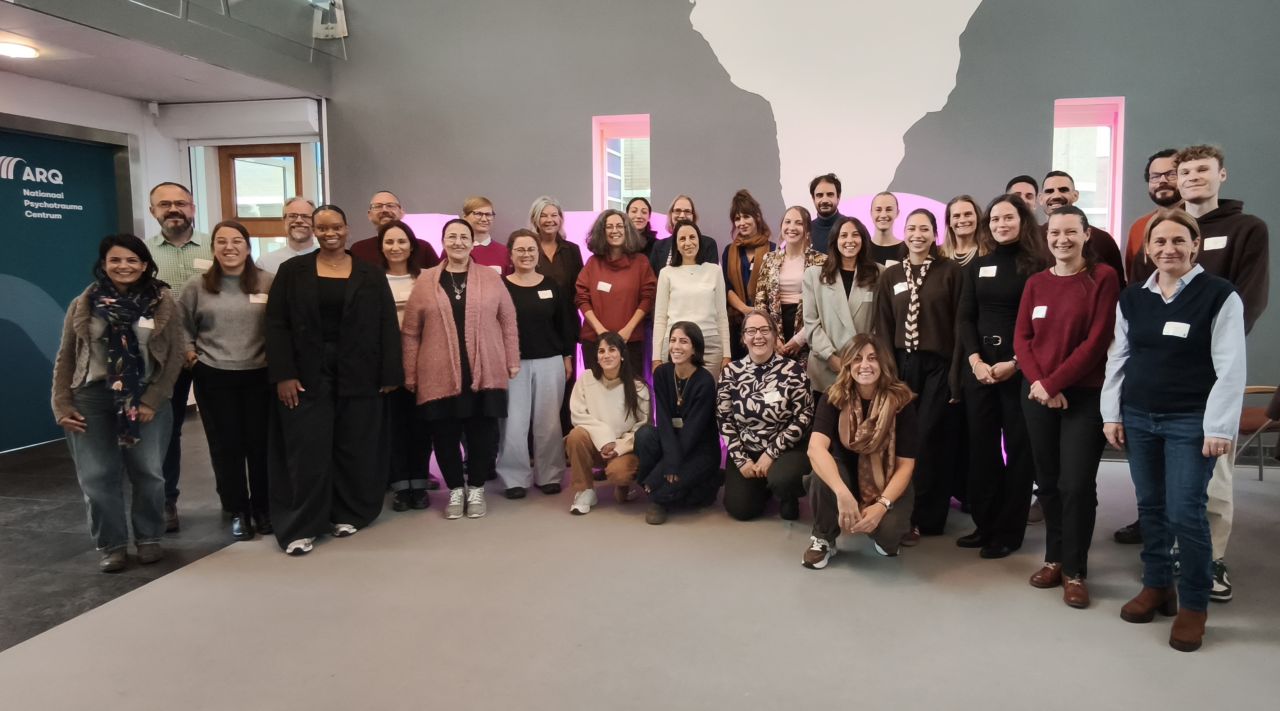
Running from October 2026 through September 2029, PORTAL brings together organisations from ten EU Member States, combining expertise in mental health, migration, child protection, education, community services, training, policy and digital innovation.
At the heart of PORTAL is a simple but important challenge: migrant children and their families may have rights to healthcare and support, yet in practice the pathways to access mental health services can be difficult to understand and navigate. PORTAL aims to bridge this gap by creating clearer connections between the places children already know and trust – such as schools, shelters, NGOs and youth services – and the clinicians, interpreters, guardianship and protection services they may need.
“We are working for a vulnerable population at a time when societal attention to these groups is changing, while the number of young people needing support has increased in recent years. Bringing together best practices in reception and care for these young people is therefore a very urgent matter. After these two days, I have the sense that we can do this, and that it is worthwhile to bring together the lessons learned and share them with others,”
Prof. Dr. Trudy Mooren, Project Coordinator at Stichting ARQ Centrum’45.
MedMA will contribute its expertise in EU asylum, migration and human rights policy to PORTAL. Its work includes coordinating community-based workshops with local stakeholders to identify barriers and develop practical, country-specific roadmaps for improving migrant children’s access to mental health and psychosocial support. MedMA will also map relevant European and national policy frameworks, develop evidence-based policy recommendations and policy briefs, and facilitate policy dialogues with institutional stakeholders. In addition, it will support the translation of the project’s findings into actionable recommendations for policymakers, promote institutional partnerships and agreements, and contribute to the project’s White Paper on the implementation of the EU Pact on Migration and Asylum in regards to migrant children’s wellbeing and access to mental health services.
From good practice to sustainable pathways
PORTAL will develop and scale participatory, child-centred and trauma-informed access models across the EU. Rather than introducing solutions from the top down, the project will involve migrant children and young people, carers, practitioners and policymakers in shaping and adapting approaches to real-life needs and settings.
The project will work in three connected stages. First, a European Community of Practice will support the exchange and adaptation of tested trauma-informed practices across countries through practical learning exchanges, mentoring and evaluation. These learning exchanges will then be translated into concrete resources and coordinated pathways, including Local Adaptation Roadmaps, a European Practitioner’s Handbook, a Modular Competence Library and digital tools to support collaboration and implementation. Finally, the PORTAL Access Programme will be implemented across eight Member States, combining psychoeducation, therapeutic group support and supported pathways into clinical care according to individual needs.
Particular attention will be given to children and young people facing heightened vulnerability, including unaccompanied and trafficked children and young people transitioning into adulthood, alongside the families, guardians, carers and communities supporting them.
Shaping better support for migrant children
Over the coming three years, PORTAL aims not only to develop new tools, but also to strengthen the ability of services and professionals to work together across organisational and national boundaries.
Already in its first year, the project plans to support the transfer of at least 20 trauma-informed practices across eight countries, involving frontline professionals from health, social care, education, NGOs and interpretation services. Around 800 migrant children and 800 carers or guardians are expected to encounter safer and more trauma-informed services during this initial phase, while actively contributing feedback to the adaptation of practices.
“I hope that by the end of PORTAL we will better understand what works, what we can do best, and how to apply that knowledge in today’s diverse European context. A major outcome would be to engage communities, schools, carers and health professionals in better responding to the needs of this young generation, while sharing what we learn across countries”
Prof. Dr. Trudy Mooren
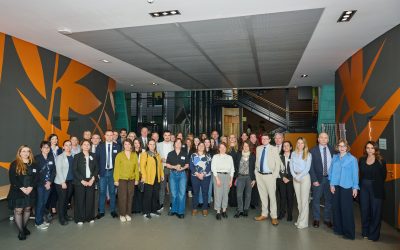
The Amsterdam kick-off meeting marks the beginning of this collaborative journey, giving partners the opportunity to align the project’s scientific, practical and organisational goals, and to lay the foundations for cooperation with children, communities, practitioners and policymakers across Europe.
Ultimately, PORTAL aims to leave behind more than a set of project outputs. Its ambition is to build lasting cooperation, provide reusable tools and strengthen the pathways connecting communities with mental health services, helping to make access to appropriate care more timely, coordinated and responsive to the realities faced by migrant children and young people.
For more information about our work, reach out to info@med-ma.eu.
To stay informed about project developments across Europe, follow PORTAL on LinkedIn.