
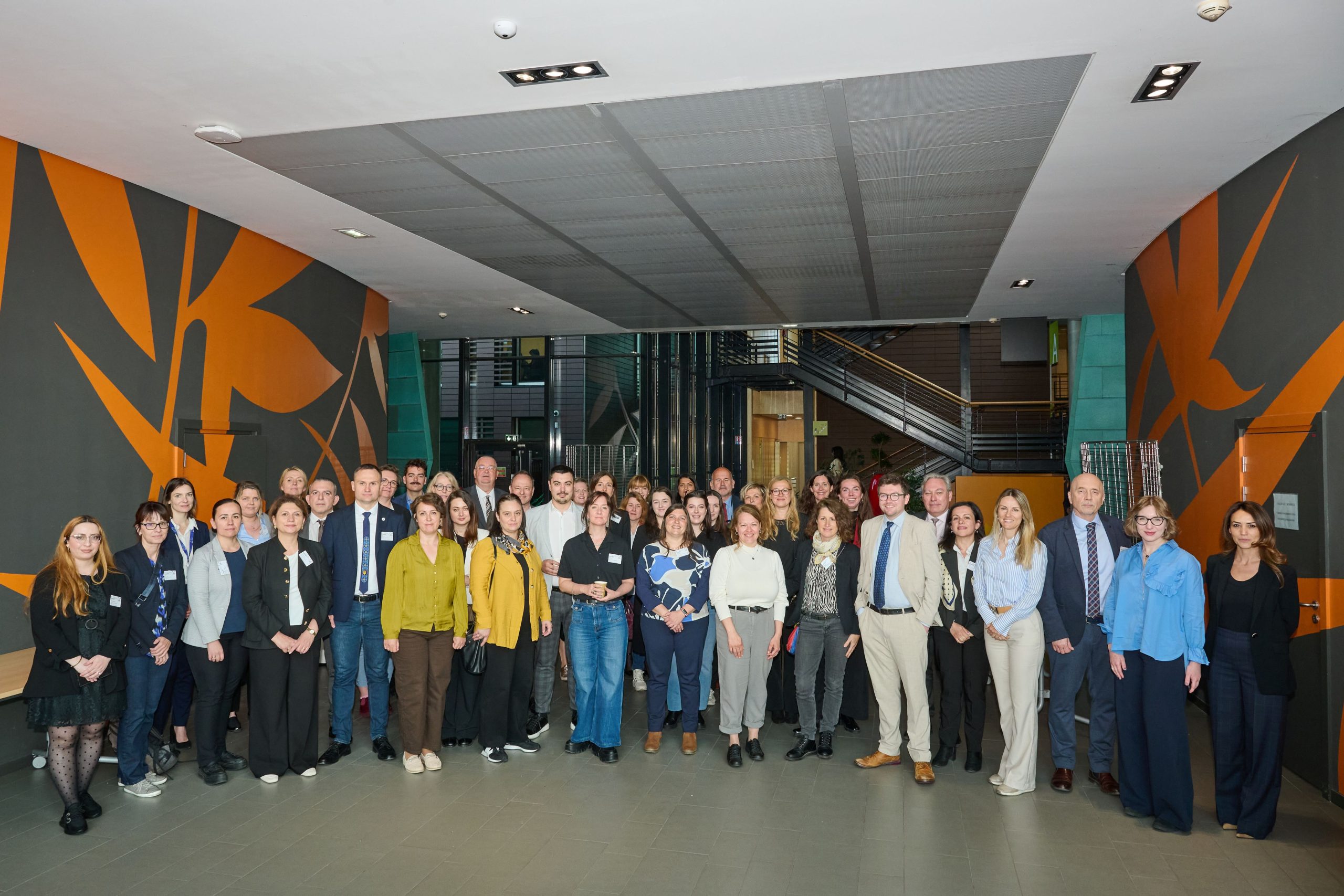
On April 29-30, 2026, the annual conference of the European Forum of National Preventive Mechanisms (NPMs) concluded with a renewed appeal for stronger and more coordinated action across Europe to address ongoing mental health challenges in places of detention.
Independent detention monitors from across Europe examined the high prevalence of mental health conditions, self-harm, and psychological distress among persons deprived of liberty in different detention settings. Participants highlighted that these issues are often exacerbated by insufficient access to healthcare, isolation practices, and limited trauma-informed approaches, particularly affecting individuals in vulnerable situations.
The conference discussions focused on key European and international standards, including Council of Europe Recommendation CM/Rec(2025)2, which promotes equal access to healthcare, continuity of care, the prohibition of solitary confinement on mental health grounds, and improved staff training and data collection systems, alongside standards developed by the Steering Committee for Human Rights in the fields of Biomedicine and Health (CDBIO), the European Committee for the Prevention of Torture and Inhuman or Degrading Treatment or Punishment (CPT), and the United Nations Subcommittee on Prevention of Torture (SPT).
Practices and experiences shared by member states during the forum highlighted continuing shortages of specialised staff and barriers to effective mental healthcare in detention settings. Participants also explored innovative approaches, such as small-scale community-based detention houses, which were presented as promising models for supporting rehabilitation and reducing reoffending.
Participants emphasised that stronger monitoring mechanisms, improved data collection, transparent reporting, and inclusive stakeholder engagement are essential for achieving sustainable reform. The conference concluded with a shared commitment to strengthening human rights-based preventive monitoring, fostering cross-sector cooperation, and amplifying the voices of people with lived experience.
Giota Panou, researcher at MedMA, participated in the forum on behalf of the institute. Her presentation, entitled “Promoting Mental Health and Safeguards for Vulnerable Groups: Specific Safeguards for Children and Adolescents,” examined the international legal framework governing the protection of refugee children in detention and detention -like settings.
Mainly, it focused on the key principles of the UN Convention on the Rights of the Child (1989):
o Best interests of the child
o Right to be heard
o Right to development
o Protection from arbitrary detention
The presentation further highlighted best practices implemented in Greece and across European Union (EU) member states, while also addressing the implications of the New Pact on Migration and Asylum. Particular emphasis was placed on the importance of preserving key safeguards that promote a more child-friendly justice system and ensure full respect for fundamental rights. According to the Joint General Comment No. 3 of the CMW and No. 22 of the CRC in the context of International Migration: General principles | OHCHR the key rights in migration context for children and adolescents are :
• Non-discrimination
• Best interests in all decisions
• Right to be heard
• Non-refoulement (no return to danger)
• Access to guardianship
Protecting the mental health of children in any form of deprivation of liberty is both a legal obligation and a moral imperative.
The annual conference was organised with the support of the joint EU–CoE project “Support to Council of Europe for EU network of prison monitoring bodies” (European NPM Forum).
![[Summary] Future of Protection Forum](https://med-ma.eu/wp-content/uploads/2026/07/073-400x250.jpg)
![[CY] MedMA to Host High-Level Forum on the Future of Refugee and Migration Protection](https://med-ma.eu/wp-content/uploads/2026/06/12-400x250.png)
![[CY] Conference Summary: National Integration Strategy for Migrants 2026–29: From Theory to Practice](https://med-ma.eu/wp-content/uploads/2026/05/compressed_under_2mb-400x250.jpg)