
The international protection regime is entering one of the most consequential periods in its history. As Europe begins implementing the new Pact on Migration and Asylum, policymakers, academics and practitioners are grappling with a fundamental question: how can migration systems remain faithful to international protection principles while responding to evolving geopolitical realities, public expectations and operational challenges?
These questions were at the heart of The Future of Protection Forum, organised by the Mediterranean Migration and Asylum Policy Hub (MedMA) under the auspices of the Deputy Ministry of Migration and International Protection of the Republic of Cyprus and hosted by the University of Nicosia School of Law.
Bringing together leading experts from European institutions, international organisations and academia, the forum examined not only the implementation of Europe’s new asylum framework but also the broader evolution of international protection in an increasingly complex world.
A Turning Point for European Migration Policy
Opening the event, MedMA Director Dr. Markos Karavias framed the discussion around a paradox confronting Europe today. After years of difficult negotiations, the European Union (EU) has adopted a comprehensive reform of its asylum system. Yet at the same time, public and academic debates increasingly question whether the international protection regime itself is reaching its limits.
Rather than viewing these discussions as contradictory, Dr. Karavias argued that they present an opportunity for reflection.
“What, if anything, is it that needs fixing? What is it about the protection regime that should command our attention in light of the present challenges? Is it that the rules and procedures are no longer fit for purpose? Is it a question of capacity or resources? Is the geopolitical context shifting? Is there a problem with the protection regime – or with the world in which it operates? Perhaps all of the above.”
Dr. Markos Karavias
He also highlighted another critical dimension often overlooked in asylum debates: Europe’s growing demand for legal labour migration. As European societies face demographic decline and labour shortages, migration policy can no longer be discussed solely through the lens of asylum. Instead, policymakers must consider how protection, labour mobility and migration management interact within a single policy ecosystem.
From Crisis Management to Common Governance
Delivering the keynote address, Deputy Minister of Migration and International Protection Dr. Nicholas A. Ioannides described the EU Pact on Migration and Asylum as a milestone in Europe’s transition from fragmented national responses towards a genuinely common migration policy. For many years, migration management relied heavily on unilateral national measures, leaving frontline Member States such as Cyprus and Greece to shoulder disproportionate responsibilities. The 2015 refugee crisis demonstrated the shortcomings of this approach, revealing that no Member State could effectively manage large-scale displacement alone.
The new Pact represents Europe’s attempt to replace crisis-driven policymaking with a permanent governance framework. Its architecture introduces common rules covering the full migration cycle, including screening procedures, harmonised asylum processes, solidarity mechanisms, border management and returns.
“The pact is not perfect. No legal framework is. Difficulties will arise. Adjustments will be needed. Some systems will be tested under pressure. But, it will be premature to dismiss the pact from the outset.”
Dr. Nicholas A. Ioannides
For Cyprus, implementation carries particular significance. As both a frontline Member State and holder of the Presidency of the Council of the EU during the Pact’s entry into application, Cyprus played a central role in advancing the European agenda. However, Dr. Ioannides stressed that legislation alone cannot guarantee success. Implementation will determine whether the Pact succeeds in creating migration systems that are efficient, credible and respectful of international obligations.
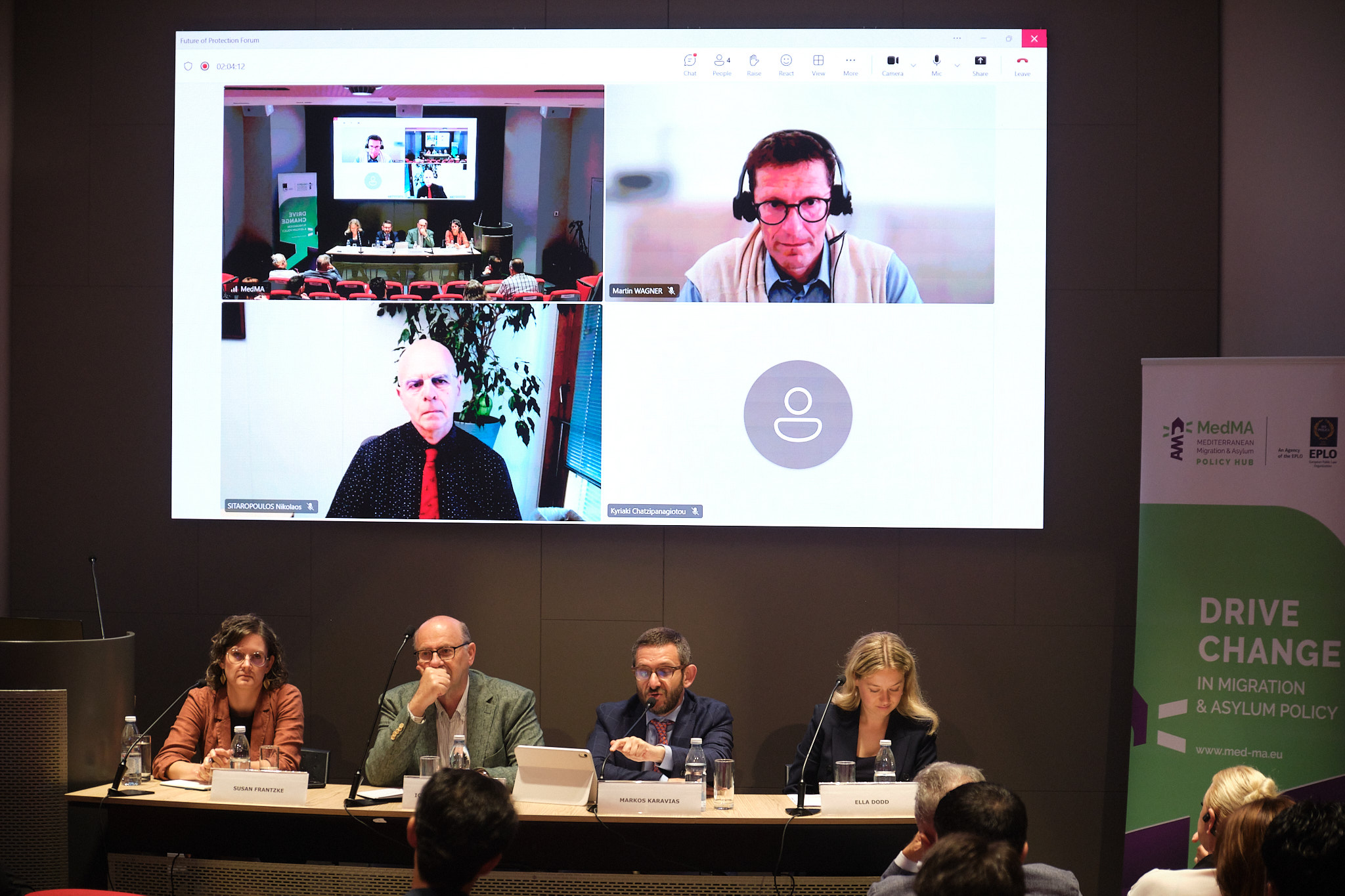
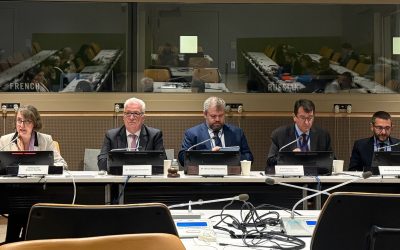
The discussion then broadened during the Forum’s panel, “Rethinking Protection: Refugees, Mobility, and the Limits of Existing Frameworks,” moderated by Dr. Markos Karavias. Bringing together experts the panel moved beyond the implementation of the Pact to examine the wider questions shaping the future of international protection. Discussions ranged from operational and legal challenges to human rights safeguards, integration, complementary pathways and the long-term sustainability of Europe’s protection framework.
Making the Pact Operational
One of the panel’s recurring themes was the practical challenge of translating legal texts into functioning administrative systems. Drawing on his experience chairing the Council Working Party on Asylum during the Cyprus Presidency, Dr. Ioannis Papageorgiou explained that Member States now face an implementation effort unlike any previous reform of the Common European Asylum System.
Across Europe, governments are investing in infrastructure, expanding reception facilities and strengthening administrative capacity. Yet implementation extends far beyond physical infrastructure.
“The pact is one of the first constructions in the area of asylum migration that has state ownership; [one] that member states understand that is in their interest to deal with. […] The pact is extremely demanding. It requires a tremendous effort from the part of administrations. It requires a very strong cooperation between various ministries, various departments, various branches of government.”
Dr. Ioannis Papageorgiou
The Pact requires unprecedented coordination between asylum authorities, border services, judicial institutions and national administrations. Qualified caseworkers, interpreters, legal experts and judges cannot be developed overnight. While funding has become available to support implementation, building institutional capacity requires time, specialised training and sustained political commitment.
The discussion also highlighted the critical role of national courts. Judicial review forms an integral part of the new system, meaning that successful implementation depends not only on executive preparedness but also on judicial capacity to process cases within demanding procedural timelines.
Human Rights at the Centre
While operational efficiency is essential, speakers repeatedly emphasised that implementation cannot come at the expense of fundamental rights. Joining remotely from the Council of Europe (CoE), Nikos Sitaropoulos, Head of the Division on Migration and Refugees, highlighted several human rights challenges that will accompany implementation of the Pact.
Among the most significant are the operation of border procedures, safeguards against refoulement, identification of vulnerable individuals and ensuring effective access to asylum procedures. Many of these issues have already been documented through years of monitoring by CoE mechanisms, demonstrating that legal standards alone are insufficient without effective implementation.
One of the Pact’s most significant innovations is the introduction of independent fundamental rights monitoring mechanisms. These bodies have the potential to strengthen accountability by monitoring border procedures, and ensuring that migration management remains fully consistent with European human rights standards. As implementation progresses, their effectiveness will depend on genuine institutional independence, adequate resources and meaningful cooperation between national authorities and European institutions.
“The independent monitoring mechanisms […] have the potential to play a very important key role in protecting and enhancing human rights and the rule of law [in] border procedures.”
Nikos Sitaropoulos
Integration Begins on Day One
The forum also explored a dimension that often receives less public attention than border management or returns: integration. Ella Dodd, Migration and Freedom of Movement Adviser at the OSCE Office for Democratic Institutions and Human Rights (ODIHR), argued that integration should not be viewed as a policy that begins after refugee recognition. Instead, successful integration starts from the moment an individual enters the reception system.
“Integration measures start from the moment of arrival. First contacts, reception conditions, and early access to services all have a lasting impact on integration trajectories. “
Ella Dodd
Reception conditions, access to services, early language learning, employment opportunities and interactions with local communities all shape long-term integration outcomes.
Although public debate surrounding the Pact has focused heavily on border management and return procedures, Ms. Dodd noted that the legislative framework also contains important provisions supporting inclusion and participation. She cautioned against selective implementation.
For the Pact to achieve its objectives, Member States must invest not only in control measures but also in integration policies that enable beneficiaries of protection to contribute fully to their host societies. This requires collaboration between governments, local authorities, employers, civil society and migrants themselves. Integration, she argued, is not the responsibility of one institution but a shared societal process.
Planning for Return Without Undermining Protection
Another major theme concerned the future of temporary protection and the eventual return of displaced populations. Drawing on recent research by the Migration Policy Institute (MPI), Susan Fratzke argued that Europe must begin preparing for future returns even while recognising that conditions in countries such as Syria and Ukraine remain unsuitable for large-scale repatriation.
Effective return planning should not be driven solely by domestic political pressures. Instead, it requires clear benchmarks, realistic timelines and close coordination between host countries, countries of origin and international organisations. Equally important is providing displaced individuals with reliable information about conditions in their home countries, enabling voluntary and informed decision-making.
“Territorial asylum and the principle of non-refoulement – the idea that people won’t be sent back to a place where they’d be at risk of imminent or severe harm – is core to the system and can’t be brought into question.”
Susan Fratzke
Ms. Fratzke also highlighted the important role that diaspora communities can play in reconstruction through skills transfer, investment and economic engagement. Rather than viewing return and integration as competing objectives, policymakers should recognise that successful integration in host countries can strengthen eventual reconstruction efforts when return becomes feasible.
Beyond Asylum: Expanding Complementary Pathways
Martin Wagner, Senior Policy Advisor for Asylum at the International Centre for Migration Policy Development (ICMPD), argued that discussions on the future of protection should extend beyond asylum systems alone. While the implementation of the Pact and the strengthening of solidarity mechanisms remain central priorities, he stressed that complementary pathways have an equally important role to play in providing protection.
“Complementary pathways are safe and regular legal pathways that enable refugees and people in need of international protection to move to other another country through existing migration channels such as employment, education, family reunification or other legal admission schemes.”
Martin Wagner
Rather than replacing asylum, these pathways complement existing protection systems by expanding the range of solutions available to those in need while reducing reliance on dangerous and irregular journeys.
Wagner noted that developing such pathways requires close cooperation between governments, international organisations, employers, educational institutions and civil society. At the same time, they must remain firmly rooted in protection principles, ensuring that access is based on people’s needs and rights rather than solely on labour market demand.
Turning to the implementation of the Pact, Wagner also reflected on the significance of the new solidarity mechanism, describing it as one of the European Union’s most ambitious attempts to operationalise responsibility-sharing. While Member States retain flexibility in how they contribut, whether through relocation, financial contributions or operational support, he observed that solidarity is no longer conceived as a voluntary political gesture but as a shared responsibility embedded within the Union’s common migration framework.
Looking ahead, Wagner argued that the future of protection will depend on Europe’s ability to combine effective asylum systems, meaningful solidarity among Member States and expanded safe and regular pathways. Together, these elements can create a more resilient and comprehensive protection architecture capable of responding to future displacement while maintaining public confidence in migration governance.
Conclusion
Throughout the discussion, speakers repeatedly returned to a broader point. The future of protection cannot be understood solely through asylum procedures. Migration today is shaped by conflict, demographic change, labour market needs, geopolitical instability, organised crime and international cooperation.
Addressing these interconnected challenges requires stronger partnerships with countries of origin and transit, expanded legal pathways for mobility and continued investment in integration.
Equally important is maintaining public confidence in migration systems. Effective returns, fair asylum procedures, robust human rights safeguards and credible implementation all contribute to preserving the legitimacy of international protection.
The forum concluded not with definitive answers but with a shared understanding that implementation of the EU Pact marks the beginning rather than the end of Europe’s migration reform journey.
The discussion made clear that the future of international protection is not about scaling back commitments, but about building stronger, more resilient systems capable of delivering protection effectively and fairly.
As Deputy Minister Ioannides observed, the objective is not less protection but more meaningful protection within a framework that is effective, credible and sustainable.
For policymakers, practitioners and researchers alike, that remains the central challenge, and opportunity, of the years ahead.
Watch the full discussion here: https://youtu.be/YiW52c3hht4
![[CY] MedMA to Host High-Level Forum on the Future of Refugee and Migration Protection](https://med-ma.eu/wp-content/uploads/2026/06/12-400x250.png)
![[CY] Conference Summary: National Integration Strategy for Migrants 2026–29: From Theory to Practice](https://med-ma.eu/wp-content/uploads/2026/05/compressed_under_2mb-400x250.jpg)